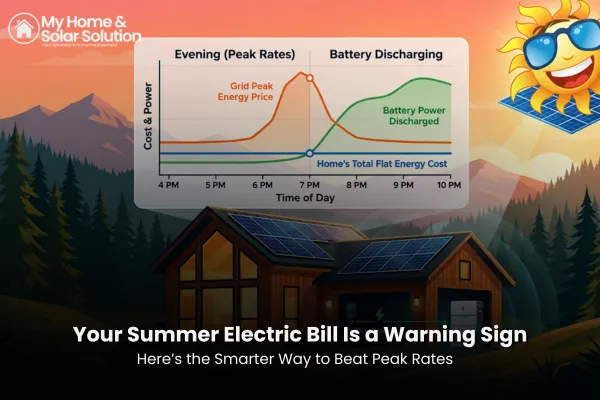
Your Summer Electric Bill Is a Warning Sign — Here’s the Smarter Way to Beat Peak Rates
Your Summer Electric Bill Is a Warning Sign — Here's the Smarter Way to Beat Peak Rates
If your summer electric bill jumped noticeably compared to last year, it's not just your imagination or your air conditioner working overtime. Utilities across the country have been raising rates faster than inflation, and summer bills in particular reveal a problem that's easy to miss the rest of the year: peak demand pricing. Under time-of-use rate plans, electricity costs the most during late afternoon and evening hours, exactly when air conditioners are running hardest and households are cooking, doing laundry, and settling in for the evening. That summer spike is a preview of where utility rate structures are headed more broadly, as utilities lean harder on time-of-use pricing to manage grid strain. A bill that stings in July is a signal worth paying attention to, not just enduring once a year.
Why simply using less energy doesn't fully solve the problem
Cutting usage helps, but it doesn't change when you're using electricity, and time-of-use rates are built around exactly that timing. A household that runs its air conditioner and appliances during the 4pm-to-9pm peak window pays premium rates no matter how efficient those appliances are. The bigger lever isn't just using less power — it's shifting when that power comes from the grid versus somewhere else.
How solar and battery storage directly target peak pricing
A home solar system generates the most power during the day, when rates are typically lowest. Without storage, that daytime power either gets exported to the grid for a modest credit or goes unused, and the household still buys expensive grid power during the evening peak. A battery closes that gap by storing midday solar and discharging it during exactly the hours when time-of-use rates are highest — turning the hours that used to be the most expensive part of the day into the hours a battery-equipped home relies on the least.
What this means heading into next summer
A high summer bill is a good prompt to look at not just how much electricity a household uses, but when. For homeowners on time-of-use rate plans, or anyone who's watched summer bills climb faster than the rest of the year, pairing solar with battery storage addresses the actual mechanism driving those spikes, rather than just cutting usage across the board.
If your summer electric bill left you wondering whether there's a smarter way to manage peak rates, My Home & Solar Solutions can help you evaluate a solar and battery system built around your home's actual usage pattern. Visit myhomesolution.org to learn more.

