Is Your Home Moving Onto SCE's High Fire-Threat Map? What It Means for Shutoffs and Your Bill
Is Your Home Moving Onto SCE's High Fire-Threat Map?
What It Means for Shutoffs and Your Bill
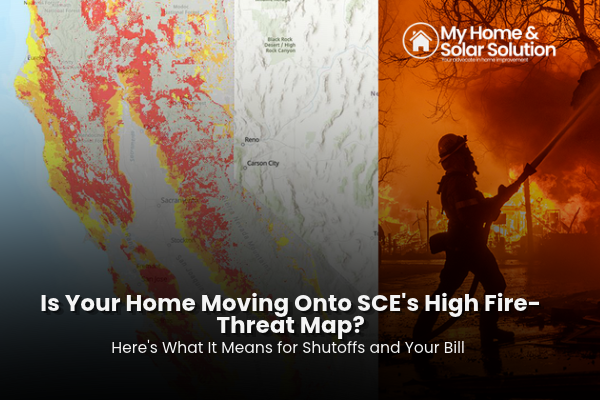
A map line you have never seen can change how your utility treats your street. California regulators have been deciding whether to add new neighborhoods to Southern California Edison's High Fire-Threat District, and homeowners should know what that means.
What regulators are deciding
A CPUC proposed decision on SCE's request would add 47 areas to the High Fire-Threat District (HFTD) in SCE's service territory. It would also deny SCE's request to remove 61 areas, so those stay in the district. Stoel Rives' regulatory update lists the item on the CPUC's October 8, 2026 voting agenda. That source previews the agenda and does not report the vote, so check the CPUC's final decision for exact terms.
What the HFTD label actually does
The designation brings stricter fire-safety rules for overhead power lines and nearby communication equipment. According to the proposed decision, newly added areas would need to fully comply by January 1, 2027. The document does not describe direct effects on customer bills. It does say SCE may incur costs it has not quantified and must show any incremental costs are reasonable.
Why homeowners should care
Being near higher fire risk can raise two worries. One is more frequent Public Safety Power Shutoffs when wind and dryness line up. The other is that safety upgrades are ultimately paid for by customers through rates, though how much, and when, is not yet clear. None of this is a reason to panic. It is a reason to plan around the grid instead of waiting on it.
What you can do now
Look up your address on SCE's fire and outage resources, sign up for alerts, and write down what your household can't go without for a day or two. Then compare that list with what your home can actually power in an outage.
How third-party ownership (TPO) works
In a TPO program, a company installs, owns and maintains the solar and battery system at your home. You pay for the power it produces without buying, leasing, or financing equipment. Many programs are designed to come in below utility rates, with savings of up to 40% depending on your home and program.
-Here is what a TPO solar and battery program can offer:
-Backup power if your area is shut off for safety
-Stored solar energy to use during expensive evening hours
-Maintenance handled for the term
A solar and battery system puts some control back in your hands, whichever way the map moves.
To find out if your home qualifies for a TPO solar and battery program, visit myhomesolution.org
Stoel Rives, Energy regulatory update, October 7, 2026: https://www.stoel.com/insights/reports/october-7-2026
CPUC proposed decision, R.15-05-006 (SCE petition to modify D.17-12-024): https://docs.cpuc.ca.gov/PublishedDocs/Published/G000/M617/K264/617264597.PDF
SCE, Public Safety Power Shutoffs: https://www.sce.com/psps

