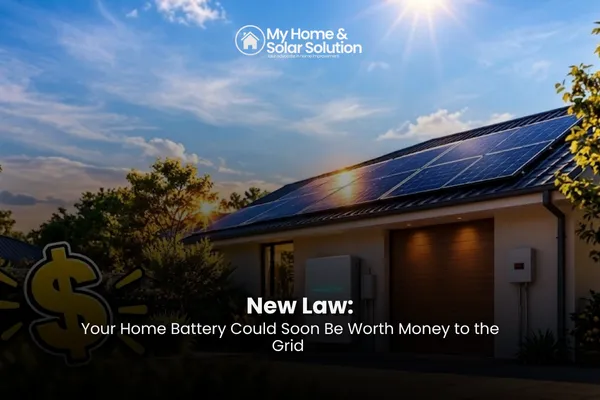
New Law: Your Home Battery Could Soon Be Worth Money to the Grid
New Law: Your Home Battery Could Soon Be Worth Money to the Grid
California just took a major step toward treating home batteries as more than backup power. Governor Gavin Newsom signed SB 913, which directs the California Public Utilities Commission to create a method for valuing customer-owned batteries that send power to the grid during periods of high demand. That matters more than ever, because demand is about to climb sharply.
Why the grid needs your battery
Data center developers have asked PG&E for about 15,000 megawatts of power and Southern California Edison for nearly 5,000 megawatts. The California Energy Commission projects that statewide electricity use could rise more than 50 percent by 2045. California's grid is most stressed during hot evenings, when solar production fades and air conditioners are running. Data centers do not slow down at night, so their demand stacks right on top of those peak hours. Batteries that can send power back during those hours help keep the grid stable.
Proof that home batteries already deliver
This is not a theory. In PG&E's 2022 emergency program with Tesla, Powerwall owners earned $2 per kilowatt-hour for power sent to the grid during emergencies. Typical participants earned $300 to $400 in the first season, with some earning up to about $575. Statewide, California now has about 21,000 megawatts of battery storage supporting its grid, up from less than 700 megawatts in 2019. More than 3,000 megawatts of that sits in smaller systems at homes, businesses and schools.
What SB 913 does and does not do
SB 913 does not set a payment amount yet. It directs regulators to develop a way to value battery power exported during high-demand periods. That opens the door for battery owners to be compensated for the power their systems provide when the grid needs it most.
Two sides of the meter
As AI and data centers drive demand higher, every home will be on one side of the meter. Homes that only buy from the grid pay more as demand rises. Homes that produce and store their own power can supply the grid and be compensated for it. Some homeowners may not love the idea of helping supply a grid that serves data centers. But supplying power and earning credits is a far better position than buying power during the most expensive hours.
Getting a battery without buying one
Many homeowners assume a battery means a big purchase. Through third-party ownership programs, qualifying homeowners can get solar and battery storage without buying or financing equipment. Many programs also include maintenance and battery replacement for the term of the agreement, so the homeowner is not responsible for repairs.
The takeaway
SB 913 signals where California is headed: home batteries are becoming valued grid resources. Homeowners who get on the supply side now position themselves for lower bills, backup power, and the chance to benefit as the grid's needs grow, with savings that can reach up to 40 percent compared with utility rates, depending on the home and program.
To find out if your home qualifies for a TPO solar and battery program, visit myhomesolution.org/california_public_utility_commissions

