NEM 3.0 Explained: Why the Old Solar Math Broke — and What Actually Works Now
NEM 3.0 Explained: Why the Old Solar Math Broke — and What Actually Works Now
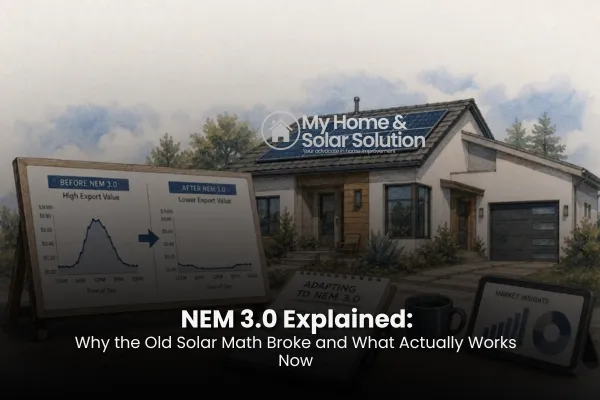
For years, California's original net metering rules made solar math simple: homeowners exported excess daytime solar to the grid and got credited at close to the retail rate, meaning a kilowatt-hour sent to the grid was worth almost the same as a kilowatt-hour bought back later. That structure, often called NEM 2.0, made a solar-only system — no battery required — a straightforward financial decision for most homeowners. NEM 3.0, the CPUC-approved successor policy, changed that math fundamentally. Export credits under NEM 3.0 are tied to the actual wholesale value of electricity at the time it's exported, which is typically far lower than the retail rate a homeowner pays to import power during certain times during the day. In practice, that means exporting midday solar now earns a fraction of what it used to, while buying grid power in the evening still costs full retail price.
Why solar-only (no battery) systems make far less sense under NEM 3.0
Under the old rules, a homeowner without a battery could export solar all day and import it back at night for roughly the same value, effectively using the grid as free storage. Under NEM 3.0, that same behavior means selling cheap and buying expensive, which erodes much of the financial benefit that made rooftop solar such an easy decision for over a decade in California.
What actually works under the new rules
Battery storage is now central to making solar pencil out in California. Instead of exporting midday solar for a low NEM 3.0 credit, a battery lets a homeowner store that power directly and use it during the evening, avoiding both the low export credit and the high retail import price. That shift in system design — from solar-only to solar-plus-storage — is the single biggest change NEM 3.0 has forced on the California residential solar market.
What this means for anyone evaluating solar today
Any solar proposal that doesn't account for NEM 3.0's export pricing is using outdated math. Homeowners evaluating solar now should expect battery storage to be a standard part of a well-designed system, not an optional upgrade, since it's what makes the economics work under current rules. Comparing new proposals to what a neighbor paid five or ten years ago, before NEM 3.0 took effect, will lead to unrealistic expectations about payback timelines. Lower your monthly electric bill by 50% without need to lease, finance or pay cash for solar + battery equipment
If you want a clear explanation of how NEM 3.0 affects your specific situation and what a properly sized solar and battery system looks like under current rules, My Home & Solar Solutions can walk you through it. Visit myhomesolution.org to learn more.

