86% of Voters Said No: The California City That Banned Data Centers
86% of Voters Said No: The California City That Banned Data Centers
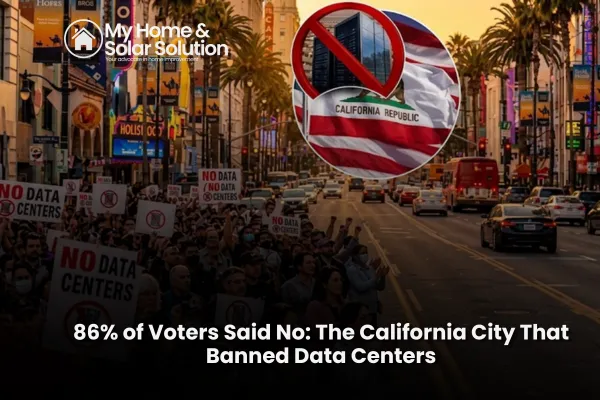
In June 2026, voters in Monterey Park, just east of Los Angeles, did something no other American city had done. With about 86 percent of the vote, they passed Measure NDC, a permanent ban on data centers within city limits. It is believed to be the first voter-enacted data center ban in the United States.
How it started
About two years earlier, the city had cleared the way for a 247,000-square-foot data center backed by Australian investment firm HMC StratCap. The project was planned for a 15.8-acre site in Saturn Business Park, less than 500 feet from the nearest home, and would have needed about 50 megawatts of power at peak demand.
Many residents said they did not learn about the plans until a year after approval. In January 2026, they packed a city council meeting to object. About three months later, the council placed the ban on the June ballot. The developer withdrew the project in March, but voters approved the ban anyway.
What 50 megawatts really means
Fifty megawatts may sound modest next to some of the giant projects proposed elsewhere in California. Running year-round, though, it adds up to about 438 million kilowatt-hours. At 8,000 kilowatt-hours per home, that is the same electricity used by roughly 54,750 homes, more than the number of households in Monterey Park itself.
Why residents said no
Supporters of the ban cited air quality, drinking water, public health and utility rates. Opponents of the project raised concerns about power demand, diesel backup generators, noise, water use, electricity costs and property values. Those same concerns are now showing up in communities from Ventura to the Imperial Valley.
The bigger lesson for California homeowners
Monterey Park showed that residents care about who gets to use their grid and what it costs them. But not every city will ban data centers, and statewide demand is still climbing. Data center developers have asked PG&E alone for about 15,000 megawatts of power, and the California Energy Commission projects statewide electricity use could rise more than 50 percent by 2045. Voting no on a local project is one way to push back. Taking control of your own power is another.
Choosing your side of the meter
As AI and data centers drive up demand, homeowners will either keep buying every kilowatt-hour from the grid or start producing their own. Homes with solar and batteries power themselves first, use stored energy during the expensive evening hours, and send extra power back to the grid for compensation. Some people dislike the idea of supplying a grid that serves data centers. But being on the supply side means earning credits from that demand instead of paying for it. Today, qualifying homeowners can get solar and battery storage through third-party ownership programs without buying or financing equipment. That means the move to the supply side does not require a large purchase or a new loan. Depending on the home and program, savings can reach up to 40 percent compared with utility rates.
The takeaway
Monterey Park voters protected their neighborhood. Every California homeowner can protect their household by producing and storing their own electricity before the next wave of demand reaches their utility bill.
To find out if your home qualifies for a TPO solar and battery program, visit myhomesolution.org/california_public_utility_commissions

