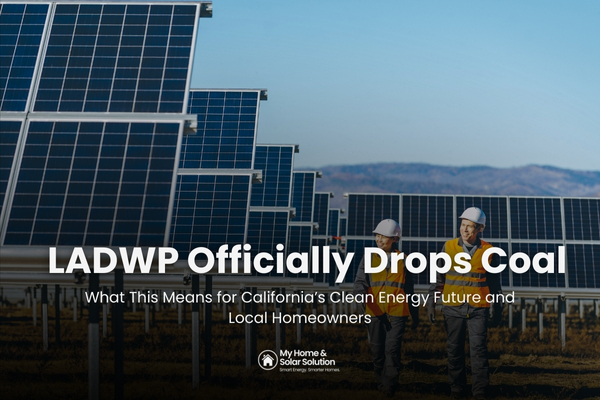
LADWP Officially Drops Coal — What This Means for California’s Clean Energy Future and Local Homeowners
LADWP Officially Drops Coal — What This Means for California’s Clean Energy Future and Local Homeowners
Los Angeles just crossed a historic milestone: the city’s largest utility, LADWP, has officially ended its reliance on coal-fired electricity. This moment has been decades in the making, and it marks the near-total disappearance of coal from California’s power grid.[2][6][3]
As the state steps into a cleaner energy era, this shift carries real implications for homeowners: cleaner air, new technologies entering the grid, and a growing push toward distributed clean energy options like solar and battery storage.
Here’s what’s happening, why it matters, and how households can use this transition to secure more predictable, affordable energy.
A Historic Milestone: California Goes Nearly Coal-Free
For years, LADWP sourced a significant share of its electricity from the Intermountain Power Plant in Utah , an out-of-state coal plant that fed Los Angeles homes and businesses for decades.[2][3]
This week, that era officially ended.
With LADWP shutting down coal-fired generation and shifting to cleaner resources, California’s utility-scale coal share has dropped to near zero. The state is effectively operating without coal, becoming the largest U.S. economy to do so.[6][2]
It’s a symbolic and technical step forward — and one that sets the stage for a cleaner, more flexible grid.
What’s Replacing Coal? Solar, Storage, and Clean Hydrogen
LADWP didn’t make this move overnight. Over the past several years, the utility has gradually built up a portfolio of:
Large-scale solar farms
Battery storage systems
Geothermal and wind resources
Hydropower imports
This allowed the coal plant to run less often without compromising reliability.[2]
And in Utah, something remarkable is happening:
The old Intermountain coal plant is being replaced with a hybrid facility designed to burn natural gas mixed with clean hydrogen — with a long-term goal of running on 100% green hydrogen produced from surplus renewable energy.[4][2]
This plant will play a role in California’s ability to store massive amounts of clean energy for days or even weeks at a time.
How Green Hydrogen Works — and Why It Matters
The plan for Intermountain is bold:
Use excess renewable electricity to power electrolyzers
Split water into hydrogen and oxygen
Store hydrogen in underground caverns
Burn hydrogen in turbines when the grid needs backup power
This transforms renewable energy into a long-duration storage resource — something California urgently needs as it moves away from fossil fuels.[2][4]
Hydrogen is still expensive, but if costs fall, it could one day help California firm up solar and wind without relying on traditional gas.
Economic & Community Impact of the Coal Phase-Out
Retiring the coal plant doesn’t happen without local consequences. Communities around the Utah facility faced:
Fewer jobs
Lower tax revenue
Economic restructuring
LADWP implemented workforce transition plans to limit layoffs and retrain workers — a blueprint similar to coal retirement efforts in Navajo communities, where plant closures eased pollution but challenged local economies.[3][2]
Clean energy transitions must uplift people, not leave them behind — and LADWP’s approach is being closely watched.
What This Means for LA, California… and Homeowners
Dropping coal is a landmark step toward LADWP’s commitment to a fully renewable grid in the coming decades—powered by hydro, geothermal, solar, wind, hydrogen, and large-scale storage.[10][2][3]
For homeowners, the shift signals:
1. California is doubling down on clean energy.
Policies and infrastructure are moving rapidly toward renewables, storage, and electrification.
2. Grid modernization will take years — and will cost billions.
Homeowners will continue to see higher utility rates as utilities invest in this future.
3. Solar + battery storage is more valuable than ever.
As the grid transforms, behind-the-meter systems offer stability, resilience, and relief from volatile utility pricing.
4. New TPO programs now make it possible with $0 out of pocket.
Homeowners can access solar + battery backup without loans, leases, or cash purchases, paying only for the clean energy the system produces — much like the PPAs used by utilities and data centers.
Bottom Line
California leaving coal behind is a historic moment — but it’s also a preview of the future: a grid in transition, massive investments ahead, and rising pressure on utility rates.
For homeowners, this is the perfect time to explore whether solar and battery storage can provide cleaner, more stable, and more affordable power — without taking on debt or installing equipment you have to maintain.
If you want to see whether your home qualifies for these new programs:
👉 https://myhomesolution.org/contact-us-vpp-powerprogram-sce-pge-sdge-solar-batterybackup-tesla-enphase
Your home deserves energy that feels steady — not stressful.
Sources
KCRW. LA DWP Is Leaving Coal Behind.
Los Angeles Times — Boiling Point Newsletter.
Los Angeles Times — Essential California.
YouTube: Green Hydrogen Overview.
KCRW News.
KCRW Reports — Coal Transition Coverage.
LADWP (Instagram).
KCRW Articles Archive.
KCRW News Categories.
KCRW — LA100 reporting.
Reddit — Uplifting News on California Renewable Planning.

