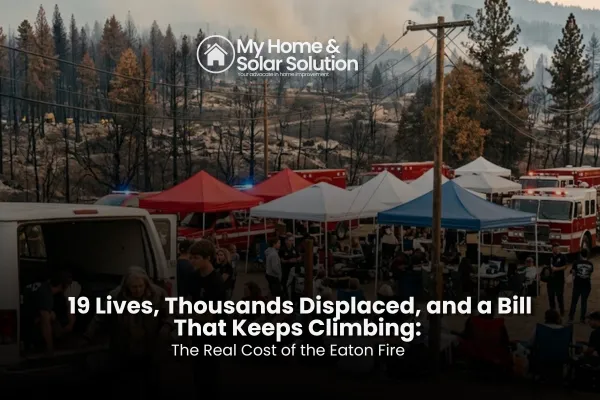
19 Lives, Thousands Displaced, and a Bill That Keeps Climbing: The Real Cost of the Eaton Fire
19 Lives, Thousands Displaced, and a Bill That Keeps Climbing: The Real Cost of the Eaton Fire
The Eaton Fire claimed lives and displaced thousands of residents, destroying homes and upending entire neighborhoods in a matter of hours. Behind the human toll investigators have documented sits a second, longer-running cost that touches far more households than those directly in the fire's path: the financial aftermath that shows up on electric bills across the utility's entire service territory for years after the fire itself is contained.
Why one fire's costs spread so far beyond the burn area
When a wildfire is linked to utility equipment, the resulting liability, under California's inverse condemnation standard, doesn't stay contained to the immediate area affected. Utilities recover wildfire-related costs, including liability settlements, legal costs, and the wildfire mitigation spending that follows, largely through rate increases and recovery bonds spread across their entire customer base. A homeowner living far from where the fire actually burned still contributes to paying for its aftermath through their monthly bill.
What the human cost actually included
Beyond the lives lost, thousands of residents were displaced from their homes, some permanently, in a fire that moved with a speed and intensity that left little time for the kind of gradual evacuation communities often plan around. The scale of displacement and loss from a fire like this represents exactly the kind of catastrophic outcome utilities are trying to prevent through increasingly aggressive Public Safety Power Shutoffs and grid hardening spending, both of which carry their own costs that also flow through to ratepayers.
Why the financial aftermath keeps compounding
Fires of this scale generate wildfire liability that utilities often address through securitized recovery bonds, spreading the cost over many years rather than a single rate case, meaning a homeowner's bill can carry charges tied to the Eaton Fire's aftermath for a decade or more. Combined with similar charges from other fires and other years, these costs stack rather than replace each other on a typical bill.
What this means for homeowners thinking about their own exposure
A fire like this is a stark reminder that the cost of California's wildfire risk isn't contained to the communities directly affected — it's distributed, through utility rate structures, across the entire customer base for years. That distribution is exactly the kind of cost that reducing grid dependence, through solar and battery storage, can help a household limit its exposure to going forward. If you want to understand how wildfire-related costs are affecting your bill and what a solar and battery system could offset, My Home & Solar Solutions can help you evaluate the options. Visit myhomesolution.org to learn more.

