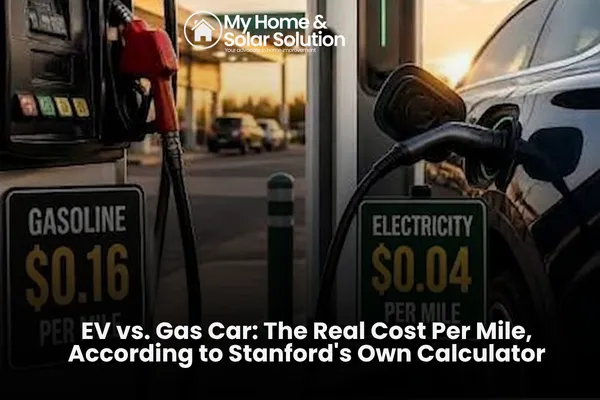
EV vs. Gas Car: The Real Cost Per Mile, According to Stanford's Own Calculator
EV vs. Gas Car: The Real Cost Per Mile, According to Stanford's Own Calculator
Comparing the cost of driving an electric vehicle versus a gas car seems like it should be simple: compare the price of electricity to the price of gasoline. In reality, a true comparison requires a more complete framework — one that economists call the "levelized cost of driving," which accounts for fuel costs, maintenance, and vehicle price differences together. Once you run the full numbers, the real cost-per-mile picture is more nuanced than a simple gas-pump comparison suggests.
Why a Simple Fuel Comparison Falls Short
It's tempting to compare cents-per-mile from electricity to cents-per-mile from gasoline and call it a day. But this ignores several other meaningful cost differences between EVs and gas vehicles: EVs generally have lower maintenance costs (no oil changes, fewer moving parts, less brake wear due to regenerative braking), different upfront purchase prices (which can run higher or lower depending on the specific vehicles being compared and available incentives), and different financing or depreciation patterns over the vehicle's life. A complete levelized cost-of-driving framework spreads all of these costs — purchase price, financing, maintenance, and energy costs — across the vehicle's expected lifetime mileage, producing a single comparable cost-per-mile figure for each vehicle type.
What the Numbers Tend to Show
Curious whether you qualify for California's Net-Billing rate plan? Check your eligibility and current CPUC rates at myhomesolution.org/california_public_utility_commissions.
Using this more complete framework, total cost-per-mile for EVs and comparable gas vehicles often land in a similar overall range — frequently somewhere between 40 and 60 cents per mile depending on the specific vehicles, financing assumptions, and local energy and fuel prices used. The exact comparison shifts based on a number of variables: how much you drive, whether you charge primarily at home versus public fast chargers, your local electricity rates and time-of-use structure, and how long you plan to keep the vehicle. For California homeowners specifically, the charging variable matters enormously. Charging an EV at home overnight during off-peak hours can be dramatically cheaper per mile than charging at public fast-charging stations, or worse, charging at home during expensive peak hours. This single factor — when and where you charge — can swing an EV's effective cost per mile more than almost any other variable in the comparison.
Why Charging Strategy Is the Real Lever
This is where the EV cost comparison connects directly back to home energy systems. A homeowner who charges an EV smartly — overnight on off-peak rates, or using a home battery charged by midday solar — can push their effective cost per mile well below typical gas vehicle costs. A homeowner who charges carelessly during peak evening hours may see much smaller savings, or in some cases, costs that aren't meaningfully different from driving a comparable gas vehicle.
Bottom Line
EV versus gas isn't simply a matter of comparing pump prices to electricity rates. A complete cost-per-mile comparison that includes maintenance and vehicle costs often shows the two vehicle types landing closer together than headlines suggest — which means charging strategy, not just the choice of vehicle, is what actually determines whether an EV ends up being meaningfully cheaper to drive for any individual household.
Curious whether you qualify for California's Net-Billing rate plan? Check your eligibility and current CPUC rates at myhomesolution.org/california_public_utility_commissions.

