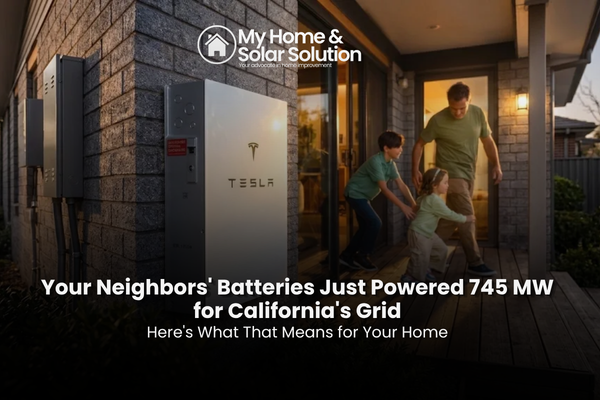
Your Neighbors' Batteries Just Powered 745 MW for California's Grid Here's What That Means for Your Home
Your Neighbors' Batteries Just Powered 745 MW for California's Grid
Here's What That Means for Your Home
During October's heat wave, California didn't just lean on power plants. It leaned on home batteries.
The problem: heat waves strain the grid when you need it most
Hot evenings are when everyone runs the air conditioner at once. That is when the grid is tight, prices spike, and outages become more likely.
Homeowners without a battery can only watch and hope the lights stay on.
What just happened
Electrek reports that Sunrun announced a combined dispatch of 745 MW on October 6, after 669 MW the day before. Tesla said more than 600 MW came from over 85,000 Powerwall owners in California, which it called the largest Powerwall virtual power plant event to date. That beat the previous September record of 580 MW by about 28%. Sunrun says it now has more than 120,000 home batteries enrolled in California grid programs. The dispatch was requested by the California Energy Commission and the state's utilities, through the Demand Side Grid Support (DSGS) and Emergency Load Reduction Program (ELRP) programs. Electrek notes this was the first time this year both were called at once across participating investor-owned utility territories.
Why it matters to you
A virtual power plant is simply many home batteries acting together. Each home keeps its own backup, and during an emergency the group can send stored power to the grid. Sunrun says participating customers are compensated, though the reporting gives no dollar amounts, and program terms vary by utility and provider. The bigger point is that batteries are now doing real work for California's grid.
How third-party ownership (TPO) works
In a TPO program, a company installs, owns and maintains the solar and battery system at your home. You pay for the power it produces without buying, leasing, or financing equipment. Many programs are designed to come in below utility rates, with savings of up to 40% depending on your home and program.
Here is what a TPO solar and battery program can offer:
Backup power during heat-wave strain and outages
Stored solar for peak evening hours
Maintenance handled for the term
Whether your home can join a grid program depends on your utility, your system and the program rules, so check your options before the next heat wave.
To find out if your home qualifies for a TPO solar and battery program, visit myhomesolution.org
Additional resources
Electrek, Tesla Powerwall and Sunrun record 745 MW California grid dispatch (Oct. 14, 2026): https://electrek.co/2026/10/14/tesla-powerwall-sunrun-record-745-mw-california-grid-dispatch/

