Sell Power on Your Terms: Why Battery Storage Beats a Solar-Only System
Sell Power on Your Terms: Why Battery Storage Beats a Solar-Only System
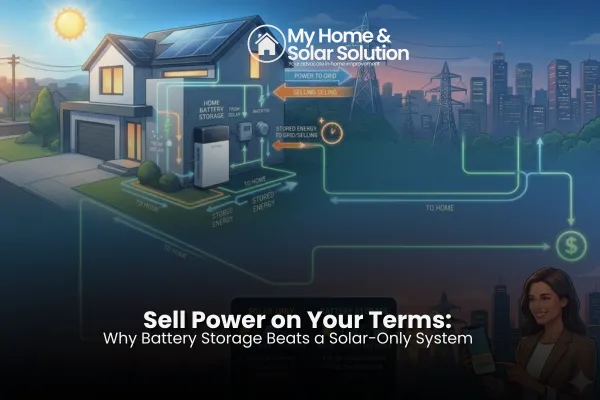
A solar-only system generates electricity on the sun's schedule, not the household's or the grid's. Excess power gets exported the moment it's produced, at whatever export rate the utility happens to be offering at that moment, regardless of whether that's actually a good time to sell. A battery changes that dynamic entirely, giving a homeowner control over when their stored solar power gets used or exported, rather than being at the mercy of production timing.
Lower your monthly electric bill by 50% without need to lease, finance or pay cash for solar + battery equipment
Why timing control matters under today's rate structures
Under California's current net billing rules, export credits fluctuate based on the wholesale value of electricity at the moment of export, which is typically lowest exactly when solar production is highest — the middle of the day, when the whole grid is flooded with solar power from every rooftop system in the region. A solar-only system is structurally forced to sell into that low-value window. A battery lets a homeowner instead hold that power and either use it themselves during the high-value evening peak, or, in some cases, export it later when grid conditions and pricing are more favorable.
The practical difference this makes
Two households with identical solar systems can end up with very different outcomes based on whether they have storage. The solar-only household exports its midday surplus for a modest credit and then buys expensive evening power from the grid. The battery-equipped household uses its own stored solar during that same expensive evening window, capturing the full retail value of that electricity instead of the much lower export credit.
Lower your monthly electric bill by 50% without need to lease, finance or pay cash for solar + battery equipment
Beyond the financial case
Timing control isn't just about maximizing credits — it also means the household has power available during a grid outage, since a battery can island the home from the grid and keep essential circuits running, something a solar-only system generally can't do since it shuts off automatically when the grid goes down.
What this means for homeowners evaluating a system
A solar-only system made a lot of sense under older net metering rules that valued exports at close to retail rates. Under today's rules, a battery isn't an optional add-on so much as the component that determines whether a solar system actually delivers on its full financial potential, on top of adding meaningful backup power resilience.
Lower your monthly electric bill by 50% without need to lease, finance or pay cash for solar + battery equipment
If you're deciding between a solar-only system and one with battery storage, My Home & Solar Solutions can walk you through what each option actually means for your bill and your backup power needs. Visit myhomesolution.org to learn more.

